Understanding Photochromic Lenses
Modern eyewear technology has evolved far beyond simple vision correction. Today, many eyeglass lenses are designed to adapt to changing environments and provide greater visual comfort throughout the day, making it important to explore a complete guide to choosing eyeglass lenses before making a decision.
One of the most popular innovations in modern optics is photochromic lenses.
But what exactly are photochromic lenses, and how do they work?
In this guide, we will explain transition lenses, explore their benefits and limitations, and help you understand whether photochromic lenses are the right choice for your lifestyle.
What Are Photochromic Lenses?
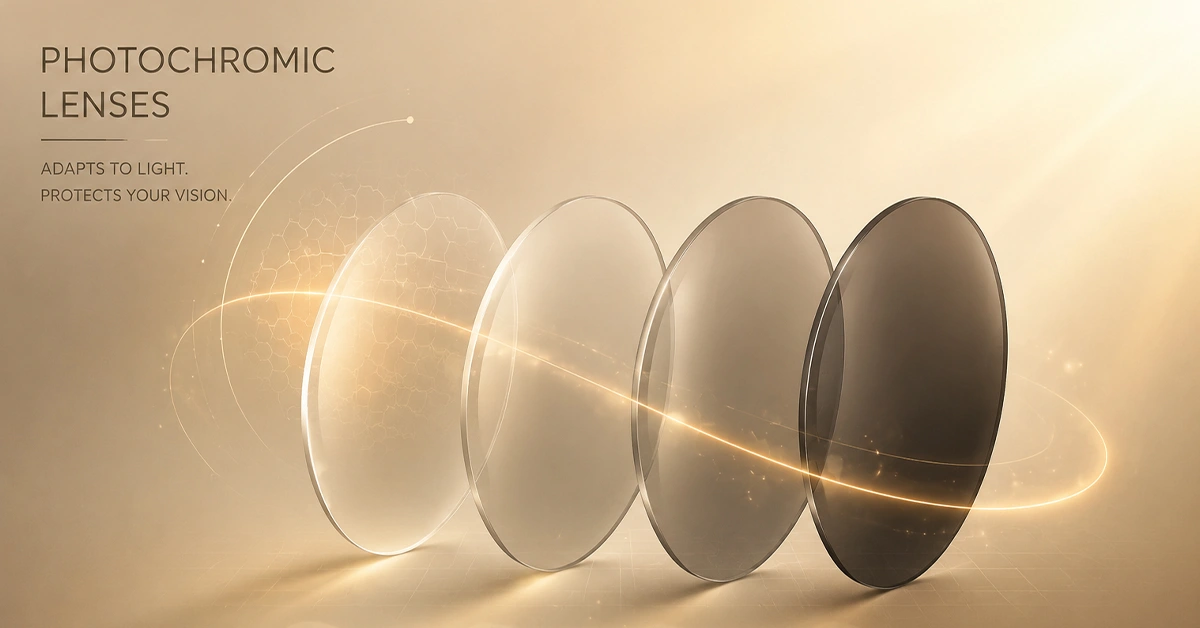
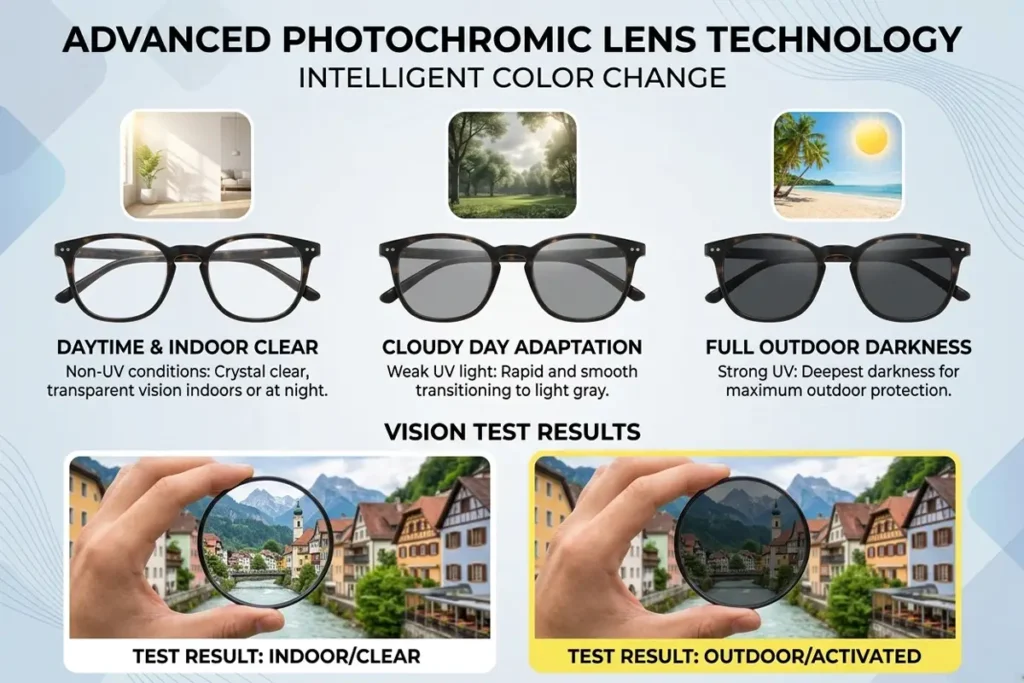
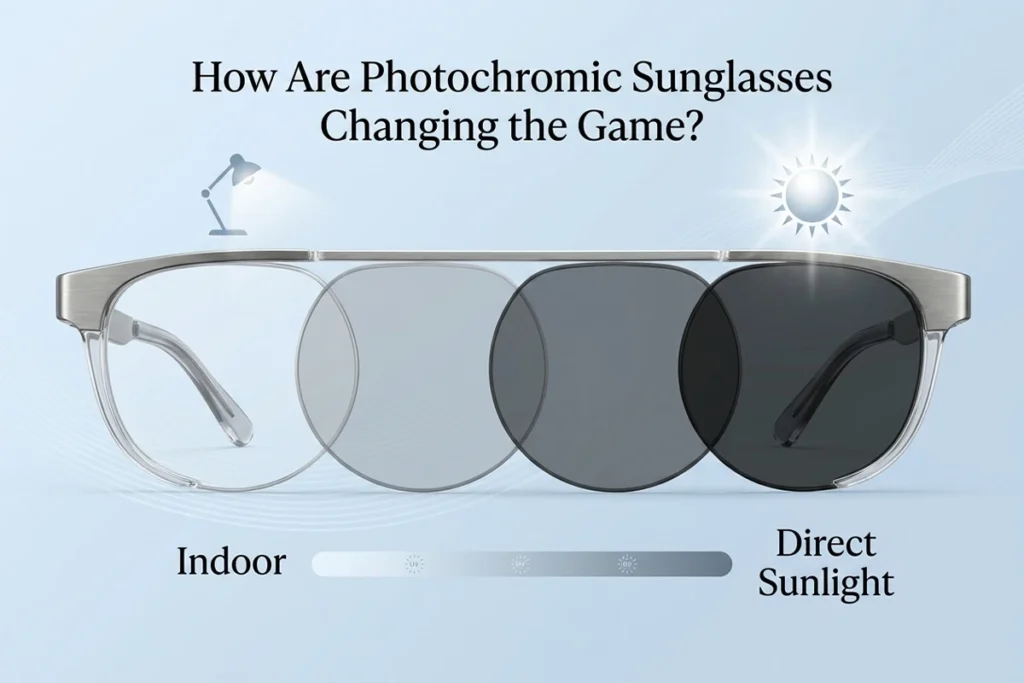
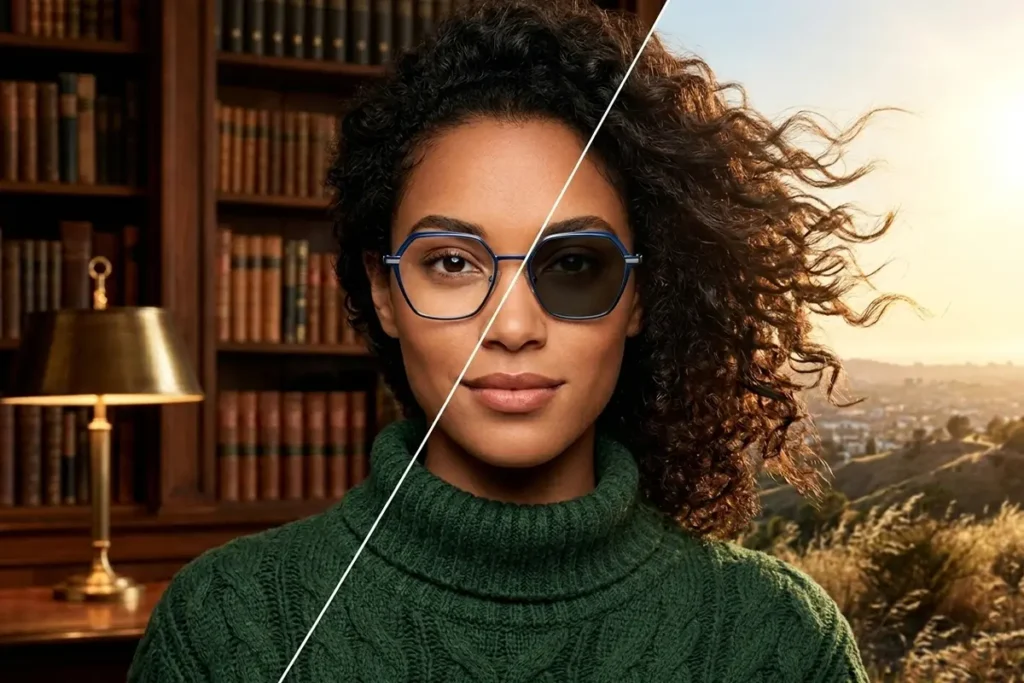
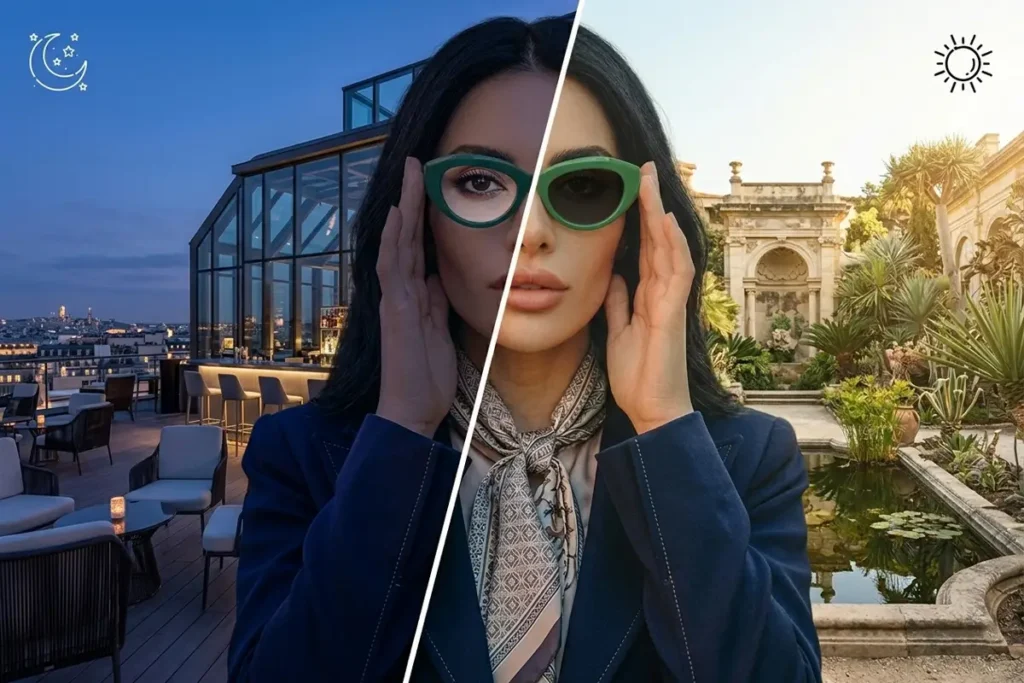
Photochromic lenses are eyeglass lenses that automatically darken when exposed to sunlight and return to a clearer state indoors.
These lenses react primarily to ultraviolet (UV) light. When UV exposure increases outdoors, the lenses activate and become darker. Once the UV exposure decreases indoors, the lenses gradually become clear again.
Because of this automatic adjustment, photochromic lenses are often called:
- Transition lenses
- Light-adaptive lenses
- Adaptive sun lenses
They combine the convenience of regular eyeglasses and sunglasses into one pair of lenses.
Photochromic Lens Color Change
How Do Photochromic Lenses Work?
Photochromic lenses contain special light-sensitive molecules embedded within the lens material or coating.
When exposed to UV radiation:
- These molecules change structure
- The lenses darken automatically
- Visible light transmission decreases
When UV exposure is reduced:
- The molecules return to their original state
- The lenses gradually become clear again
This process happens continuously throughout the day depending on lighting conditions.
Modern photochromic technology has become significantly faster and more responsive compared to older generations of transition lenses.
Benefits of Photochromic Lenses
Photochromic lenses offer several practical advantages for everyday eyewear users.
Convenience
One of the biggest benefits is convenience.
Instead of switching between:
- Prescription glasses
- Sunglasses
users can wear a single pair throughout the day.
This is especially useful for people who frequently move between indoor and outdoor environments.
UV Protection
Most photochromic lenses provide strong UV protection against harmful ultraviolet rays.
Long-term UV exposure may contribute to eye health concerns over time, making UV protection an important feature in modern eyewear.
Comfortable Vision Outdoors
Bright sunlight can create glare and visual discomfort.
Photochromic lenses automatically reduce brightness outdoors, helping improve comfort during:
- Walking
- Driving
- Outdoor activities
- Daily commuting
Reduced Eye Fatigue
Constantly adapting to changing light conditions may contribute to visual fatigue.
Light-adaptive lenses help maintain more stable visual comfort throughout the day.
Are Photochromic Lenses Good for Driving?
Many consumers search for photochromic lenses for driving, but this topic requires some clarification.
Traditional photochromic lenses react mainly to UV light. Since most car windshields already block a significant amount of UV radiation, some photochromic lenses may not darken fully inside a vehicle.
However, newer photochromic technologies have improved driving performance by reacting partially to visible light as well.
For frequent daytime drivers, some users still prefer:
- Dedicated prescription sunglasses
- Polarized driving lenses
while others appreciate the convenience of modern adaptive lenses during everyday driving situations.
Are Photochromic Lenses Worth It?
For many people, the answer is yes.
Photochromic lenses are especially useful for:
- People who spend time outdoors
- Users sensitive to sunlight
- Everyday wearers seeking convenience
- Individuals who do not want separate sunglasses
However, they may not be ideal for every situation.
Some consumers prefer dedicated sunglasses for:
- Very bright sunlight
- Beach environments
- Driving in intense glare conditions
The best choice depends on lifestyle and visual preferences.
Types of Photochromic Lenses
Modern photochromic lenses are available in different designs and materials.
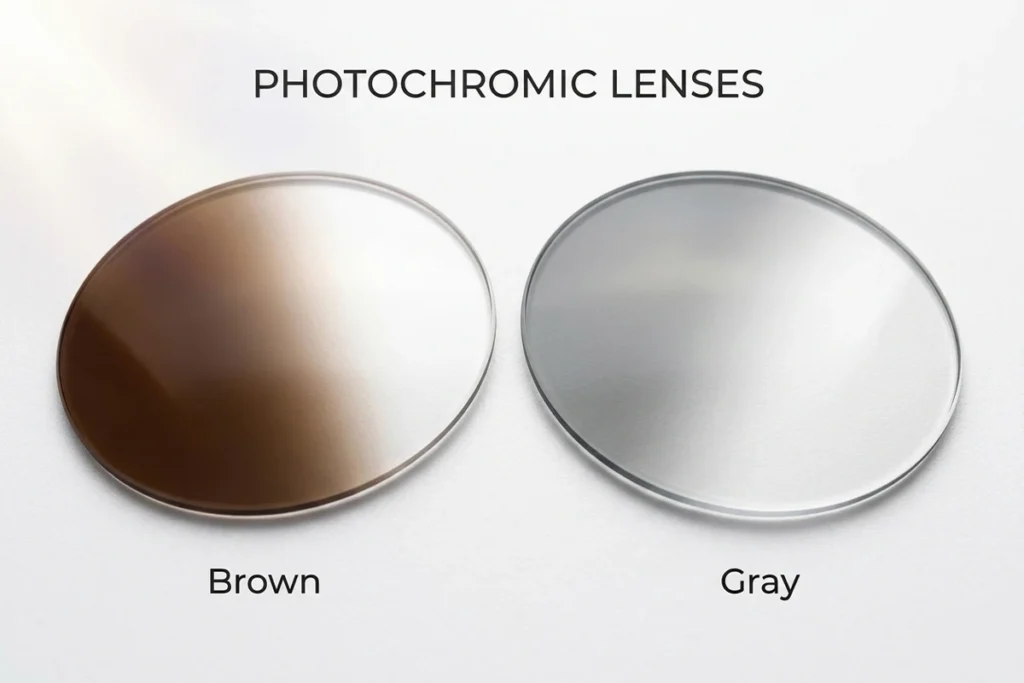
Gray Photochromic Lenses
Gray lenses provide neutral color perception and are one of the most popular options.
Brown Photochromic Lenses
Brown tones may enhance contrast and depth perception in certain lighting conditions.
Photochromic Progressive Lenses
Many progressive lenses can now include photochromic technology, combining:
- Multifocal vision correction
- Light adaptation
- UV protection
in one lens.
Blue Light and Photochromic Combination Lenses
Some modern lenses combine:
- Blue light filtering
- Photochromic technology
- Anti-reflective coatings
Modern Transition Lens Designs
What Are the Limitations of Photochromic Lenses?
Although photochromic lenses offer many advantages, they also have some limitations.
Slower Activation in Cold or Hot Temperatures
Extreme temperatures can affect transition speed and darkness levels.
Reduced Performance Inside Cars
As mentioned earlier, some lenses may not darken fully behind UV-protective windshields.
Slight Residual Tint
Certain photochromic lenses may retain a very light tint indoors, depending on lens technology.
Despite these limitations, modern adaptive lens technologies have improved significantly in recent years.
How Modern Lens Technology Improved Photochromic Performance
Early generations of photochromic lenses often had:
- Slow activation
- Uneven darkening
- Limited durability
Today’s advanced lens technologies provide:
- Faster transitions
- Better optical clarity
- More natural indoor appearance
- Improved durability
- Enhanced outdoor comfort
Modern manufacturing methods allow photochromic performance to be more stable and visually appealing than older designs.
Brands such as Smart Vision continue developing modern lens solutions designed for changing lifestyles and everyday visual comfort.
Discover Smart Vision Photochromic Lens Solutions
At Smart Vision, modern eyewear technologies are designed to deliver comfortable vision in changing environments.
Photochromic lenses combine convenience, UV protection, and adaptive comfort in a single solution for modern lifestyles.
Why Choose Smart Vision Photochromic Lenses?
- Automatic light adaptation
- Comfortable outdoor vision
- UV protection for daily wear
- Modern lens technologies
- Convenient all-day eyewear solutions
As visual demands continue to evolve, adaptive lenses have become an increasingly popular option for everyday eyewear users.
Smart Vision Outdoor Lifestyle Eyewear
Final Thoughts
Photochromic lenses are one of the most practical innovations in modern eyewear technology.
By automatically adapting to changing light conditions, these lenses help improve visual comfort, reduce glare, and simplify everyday eyewear use.
Although they may not completely replace sunglasses in every situation, photochromic lenses remain an excellent option for many consumers seeking convenience, UV protection, and comfortable vision throughout the day.
As optical technologies continue to advance, modern transition lenses are becoming faster, clearer, and more effective than ever before.