Choosing Between Polycarbonate and High-Index Lenses
When buying new glasses, most people focus on selecting the right frame. However, the material used to make your lenses can have just as much impact on comfort, appearance, durability, and visual performance. This eyeglass lens guide compares two of the most popular modern lens materials: polycarbonate lenses and high-index lenses. Both are lighter and thinner than traditional plastic lenses, but they are designed for different priorities and lifestyles.
So, which lens material is best?
In this guide, we’ll compare polycarbonate and high-index lenses, explain their strengths and weaknesses, and help you decide which option is best for your vision needs.
Why Lens Material Matters
Your prescription determines how your lenses are shaped, but the material determines important characteristics such as:
- Thickness
- Weight
- Impact resistance
- Optical clarity
- Comfort
- Appearance
The right lens material can make glasses feel lighter, look more attractive, and perform better throughout the day.
Understanding Polycarbonate Lenses
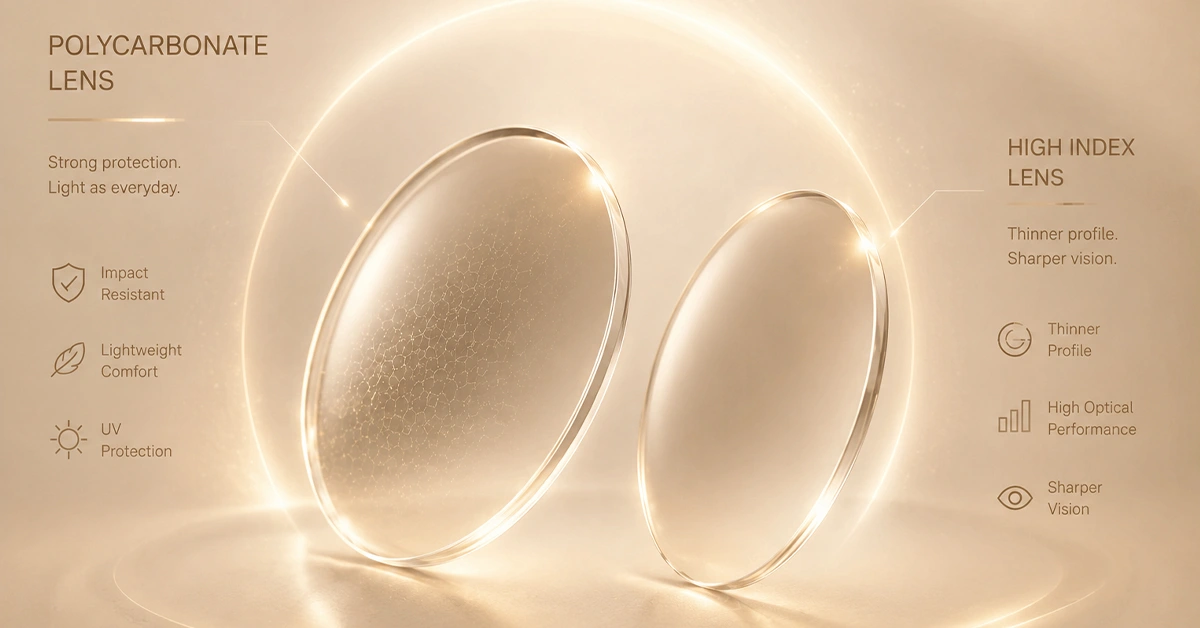
Polycarbonate was originally developed for applications requiring exceptional durability and impact resistance. Today, it has become one of the most widely used materials in the eyewear industry.
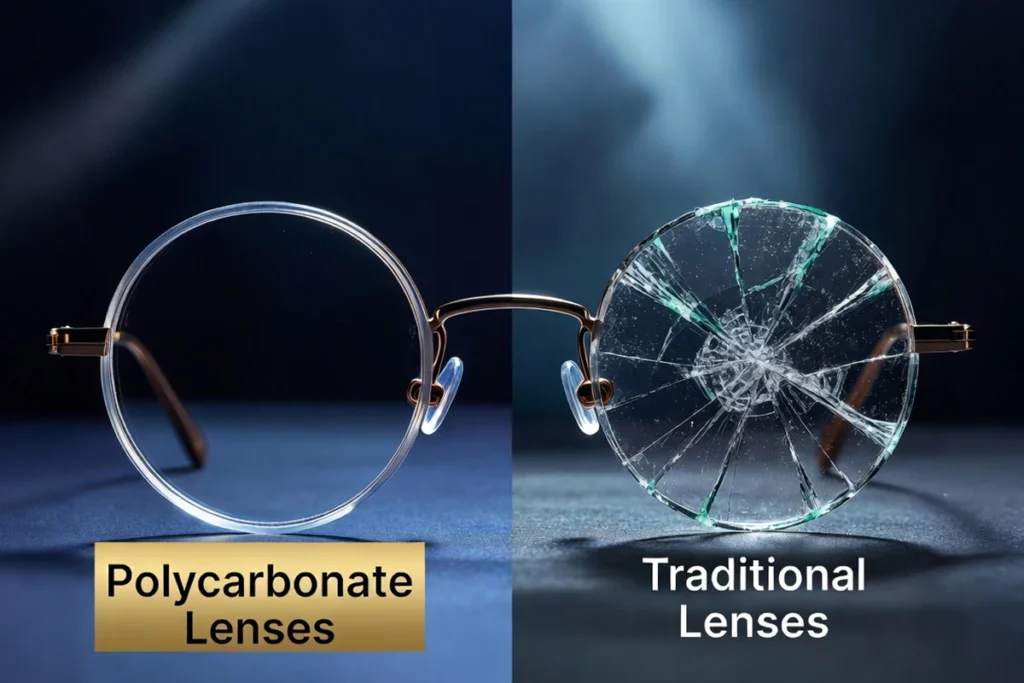
Polycarbonate lenses are approximately ten times more impact-resistant than standard plastic lenses, making them a popular choice for active lifestyles.
Key Features of Polycarbonate Lenses
- Lightweight construction
- High impact resistance
- Built-in UV protection
- Thinner than standard plastic lenses
- Suitable for children and sports eyewear
Because of their durability, polycarbonate lenses are often recommended for safety glasses, children’s eyewear, and active adults.
What Are High-Index Lenses?
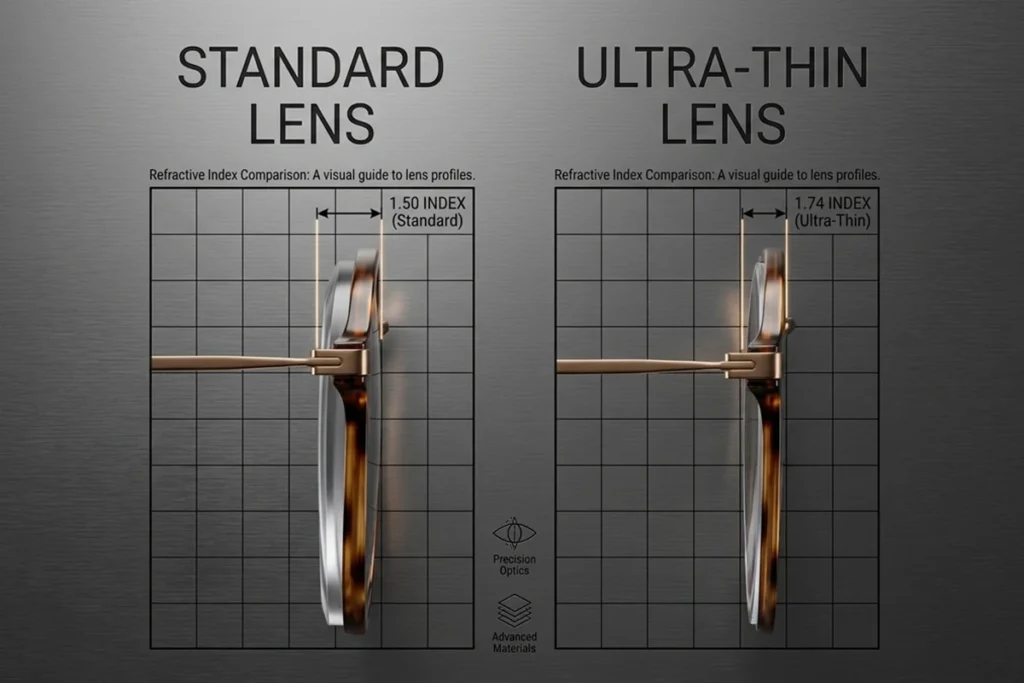
High-index lenses are designed to bend light more efficiently than conventional lens materials.
This allows manufacturers to create thinner lenses while maintaining the same prescription power.
For people with moderate to strong prescriptions, high-index materials can dramatically reduce lens thickness and improve the cosmetic appearance of glasses.
Advantages of High-Index Lenses
- Significantly thinner profiles
- Reduced lens edge thickness
- Lightweight feel
- Improved cosmetic appearance
- Ideal for strong prescriptions
Many wearers choose high-index lenses primarily because they look better in the frame and feel more comfortable during extended wear.
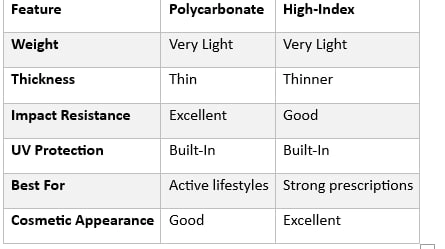
Polycarbonate vs High-Index Lenses
Although both materials are considered premium upgrades compared to standard plastic lenses, they serve different purposes.
Which Lens Material Is Best for Strong Prescriptions?
One of the most common questions consumers ask is whether polycarbonate or high-index lenses are better for strong prescriptions.
In most cases, high-index lenses are the preferred option.
Because they bend light more efficiently, they can achieve the same prescription correction with less material thickness.
Benefits include:
- Slimmer lens edges
- Less magnification or minification effects
- Improved frame compatibility
- More attractive appearance
For people with moderate to high prescriptions, these advantages can be substantial.
Which Material Is Better for Children?
When it comes to children’s eyewear, safety is often the top priority.
Polycarbonate lenses are widely recommended because they:
- Resist impact exceptionally well
- Are lightweight and comfortable
- Provide UV protection
- Reduce the risk of lens breakage
For active children and teenagers, durability often outweighs cosmetic concerns.
Are High-Index Lenses More Comfortable?
Comfort depends on several factors, including prescription strength and frame size.
For stronger prescriptions, high-index lenses often feel more balanced because they reduce excess lens weight and thickness.
This can lead to:
- Better frame stability
- Less pressure on the nose
- Improved aesthetics
- Enhanced all-day comfort
For lower prescriptions, however, the comfort difference may be less noticeable.
Optical Performance Considerations
Both materials provide excellent vision correction when manufactured properly.
However, some high-index materials may create slightly more reflections than polycarbonate lenses.
This is why anti-reflective coatings are commonly recommended for high-index lenses.
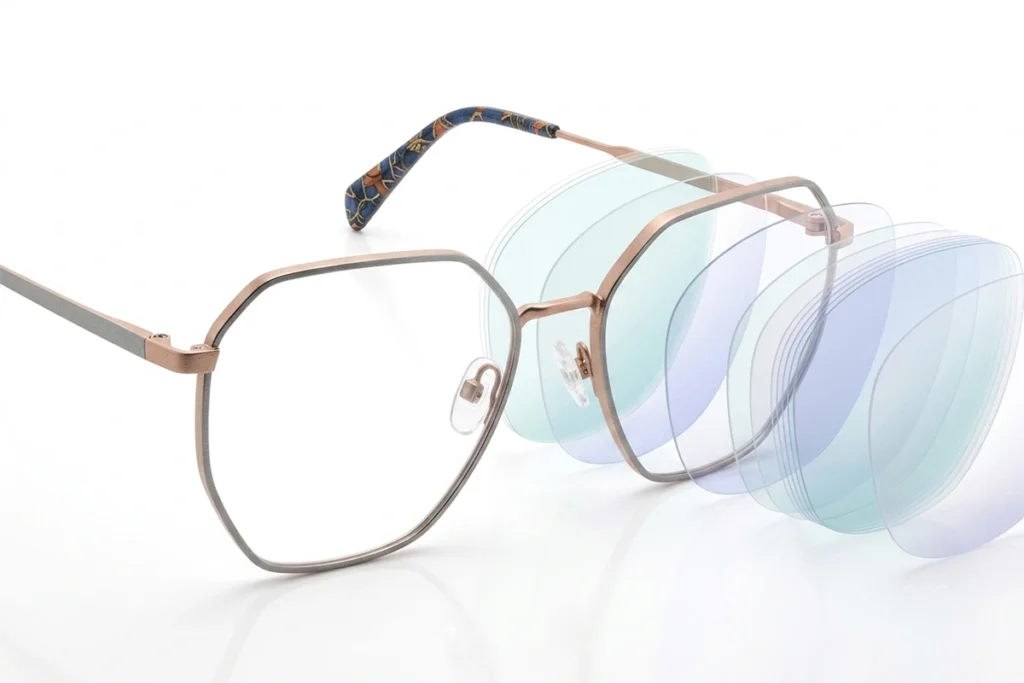
Modern lens coatings can improve:
- Clarity
- Contrast
- Night driving comfort
- Lens appearance
Premium Lens Coating Technologies
How to Choose the Right Lens Material
There is no single lens material that is perfect for everyone.
Consider the following:
Choose Polycarbonate Lenses If:
- You prioritize durability
- You play sports
- You need safety eyewear
- You are purchasing glasses for a child
- Your prescription is relatively mild
Choose High-Index Lenses If:
- You have a moderate or strong prescription
- You want thinner lenses
- You prefer a premium cosmetic appearance
- You wear glasses all day
- You want maximum lens slimness
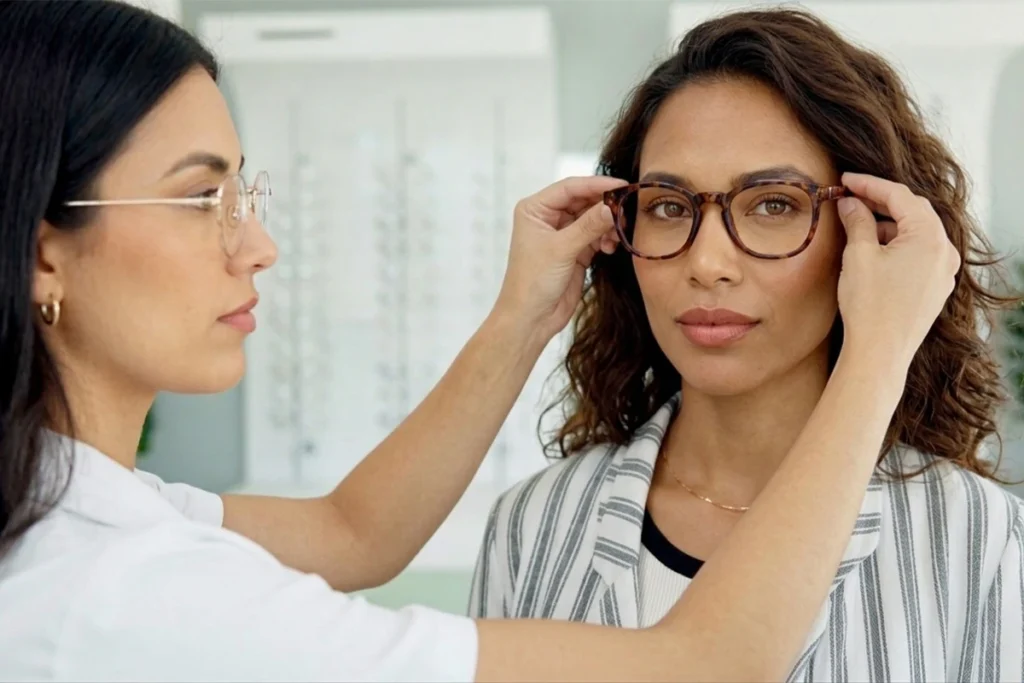
Your eye care professional can help determine which material best matches your prescription and lifestyle.
Choosing the Right Eyeglass Lenses
Discover Smart Vision Lens Solutions
At Smart Vision, we understand that every wearer has unique visual needs.
Whether you need the durability of polycarbonate lenses or the sleek appearance of high-index technology, choosing the right lens material can significantly improve your everyday visual experience.
Why Choose Smart Vision Lenses?
- Advanced optical materials
- Lightweight lens options
- Solutions for strong prescriptions
- Modern coating technologies
- Comfortable vision for everyday life
Smart Vision is committed to helping consumers find lens solutions that combine clarity, comfort, durability, and style.
Final Thoughts
The debate between polycarbonate and high-index lenses is not about which material is universally better—it is about which material is better for you.
Polycarbonate lenses excel in durability and safety, while high-index lenses offer superior thinness and cosmetic appeal for stronger prescriptions.
By understanding the strengths of each material, you can make a more informed decision and enjoy eyewear that fits both your vision needs and your lifestyle.