
Understanding How to Know What Glasses You Need
Many people experience blurred vision, eye strain, or headaches without realizing they may need glasses. Others already know their vision is changing but are unsure about what type of glasses they actually need.
So how do we know what glasses we need?
The answer depends on your symptoms, daily visual habits, and a proper eye examination. While only an eye care professional can provide an accurate prescription, understanding the signs and options, such as the different types of eyeglass lenses, can help you make better decisions about your vision health.
In this guide, we will explain the signs you need prescription glasses, different types of corrective lenses, and how to choose the right glasses for your lifestyle.

Signs You Need Prescription Glasses
Many vision problems develop gradually, which makes them easy to ignore at first. However, there are several common signs that indicate you may need glasses.
Frequent Blurry Vision
If objects appear blurry at a distance or up close, this is one of the most common signs of refractive error.
- Blurry distance vision may indicate myopia (nearsightedness)
- Blurry near vision may indicate hyperopia or presbyopia
Headaches and Eye Strain
Frequent headaches, especially after reading or using screens, can be a sign that your eyes are working harder than they should.
This is often linked to:
- Uncorrected vision problems
- Prolonged screen use
- Poor lighting conditions
Squinting to See Clearly
If you find yourself constantly squinting to improve clarity, your eyes are trying to compensate for an uncorrected vision issue.
Difficulty Seeing at Night
Poor night vision or difficulty driving in low-light conditions can indicate a need for corrective lenses.
Eye Fatigue from Screens
Long hours of digital device use can reveal hidden vision problems or increase discomfort if your prescription is outdated.
How to Know What Glasses You Need
Understanding what type of glasses you need starts with identifying your visual challenges.
Step 1: Identify Your Main Vision Problem
There are three primary types of refractive errors:
- Myopia (nearsightedness): difficulty seeing far away
- Hyperopia (farsightedness): difficulty seeing up close
- Astigmatism: distorted or blurred vision at all distances
Step 2: Consider Your Daily Activities
Your lifestyle plays a major role in choosing the right glasses.
Ask yourself:
- Do I spend long hours on a computer?
- Do I drive frequently, especially at night?
- Do I read or work up close for long periods?
- Do I switch between near and far vision often?
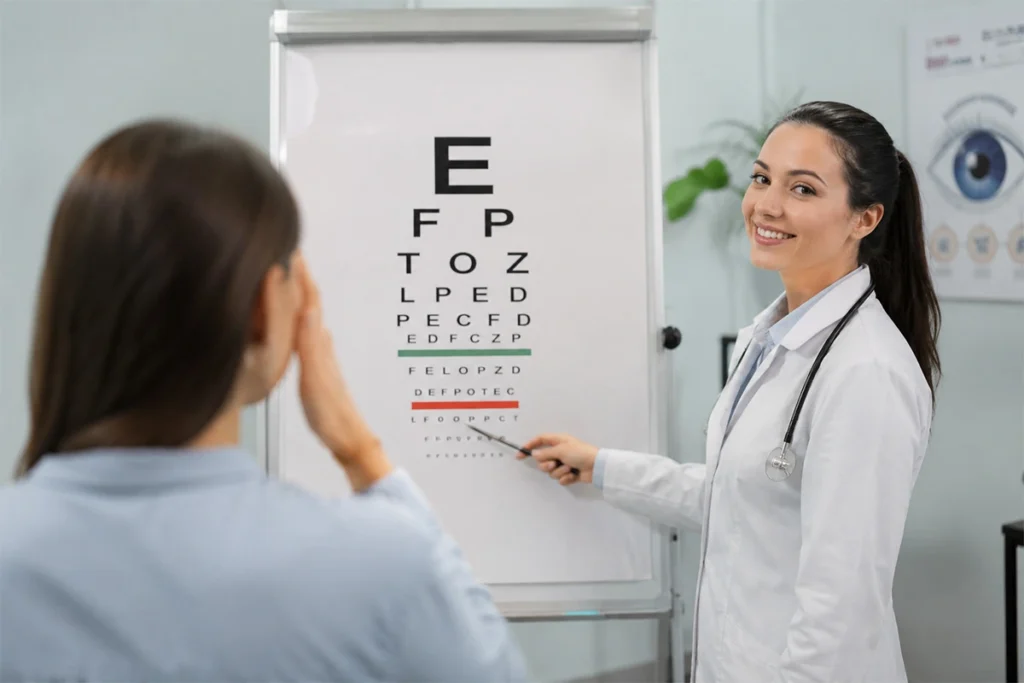
Step 3: Get a Professional Eye Exam
The most accurate way to know what glasses you need is through a comprehensive eye examination.
An eye care professional will:
- Measure your prescription
- Check eye health
- Recommend suitable lens types
Eye Examination Process
What Type of Glasses Do I Need?
Once your prescription is determined, the next step is choosing the right lens type.
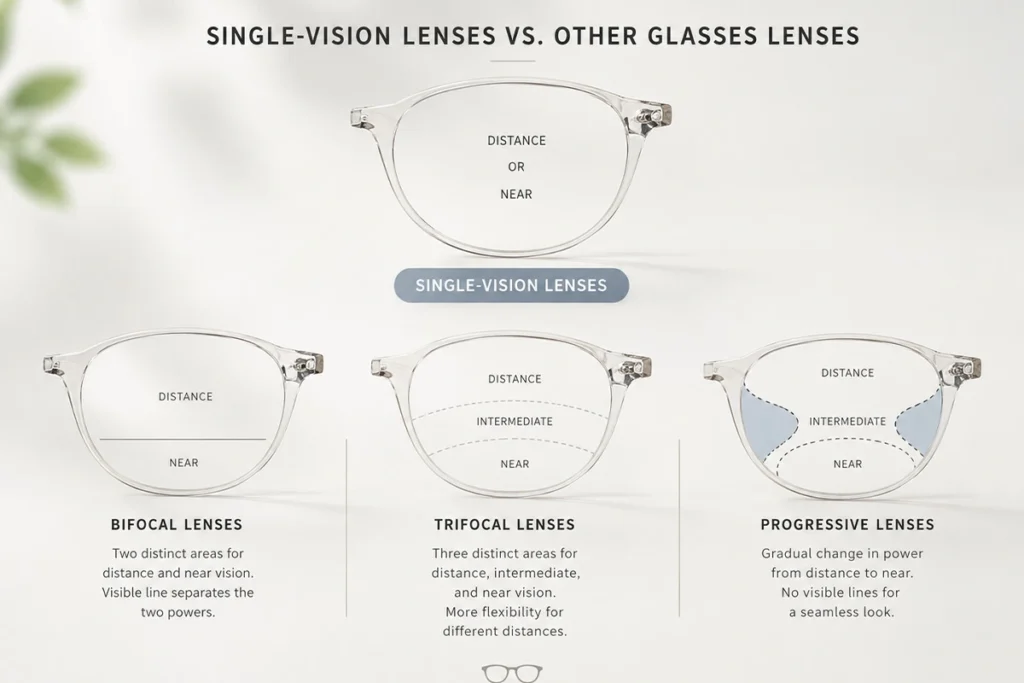
Single Vision Glasses
Single vision lenses correct one field of vision:
- Distance
- Reading
- Computer use
They are ideal for:
- Young users
- Simple vision correction needs
- Dedicated reading or driving glasses
Progressive Glasses
Progressive lenses provide multiple vision zones in one lens:
- Distance vision (top)
- Intermediate vision (middle)
- Near vision (bottom)
They are ideal for:
- Adults over 40
- People with presbyopia
- Users who want one pair for all activities
Reading Glasses
Reading glasses are designed specifically for close-up tasks:
- Reading books
- Using phones
- Close desk work
Computer Glasses
Computer glasses are optimized for screen distance and reduce eye strain during long digital use.
Photochromic Glasses
These lenses automatically adjust to light conditions:
- Clear indoors
- Dark outdoors
They are ideal for people who move frequently between indoor and outdoor environments.
Types of Prescription Glasses
Best Glasses for Vision Correction
The best glasses are not the same for everyone.
They depend on:
- Age
- Prescription strength
- Work environment
- Screen usage
- Driving habits
For Simple Vision Needs
Single vision lenses are often sufficient.
For Aging Eyes
Progressive lenses are usually the best option.
For Digital Lifestyles
Computer or blue light filtering lenses may improve comfort.
For Outdoor Users
Photochromic lenses offer convenience and UV protection.
How to Choose the Right Glasses
Choosing the right glasses involves more than just correcting vision.
Lens Material
- Lightweight plastic for comfort
- Polycarbonate for safety
- High-index for strong prescriptions
Lens Coatings
- Anti-reflective coating for clarity
- Scratch-resistant coating for durability
- UV protection for eye safety
- Blue light filtering for digital comfort
Frame Fit
Comfortable frames ensure proper lens positioning and long-term wearability.
Choosing Eyewear Wisely

When Should You Replace Your Glasses?
Even if you already wear glasses, your prescription may change over time.
You should consider an update if:
- Vision becomes blurry again
- Headaches return
- Eye strain increases
- You struggle with night driving
- Your glasses feel less comfortable
Most people should have an eye exam every 1–2 years.
Why Modern Lens Technology Matters
Today’s eyeglasses are highly advanced optical systems designed for precision, comfort, and lifestyle needs.
Modern lens technologies offer:
- Better visual clarity
- Wider fields of vision
- Reduced distortion
- Improved comfort for long-term wear
Brands such as Smart Vision focus on delivering modern eyewear solutions designed for everyday visual performance and comfort.

Discover Smart Vision Solutions
At Smart Vision, eyewear is designed to help you see clearly in every part of your life—whether you are reading, working, driving, or using digital devices.
Why Choose Smart Vision Glasses?
- Advanced prescription lens options
- Comfortable everyday vision solutions
- Modern coatings for clarity and protection
- Options for all lifestyles and ages
- Designed for long-term visual comfort
Smart Vision Eyewear Experience

Final Thoughts
Knowing what glasses you need starts with recognizing the signs of vision problems and understanding your daily visual needs.
While self-awareness is important, a professional eye exam is essential for accurate diagnosis and correction.
With the right lenses and proper eyewear selection, you can significantly improve visual comfort, reduce eye strain, and enhance your quality of life.
Choosing the right glasses is not just about seeing better—it’s about living better every day.